Body Contouring After Gastric Sleeve: What You Need to Know About
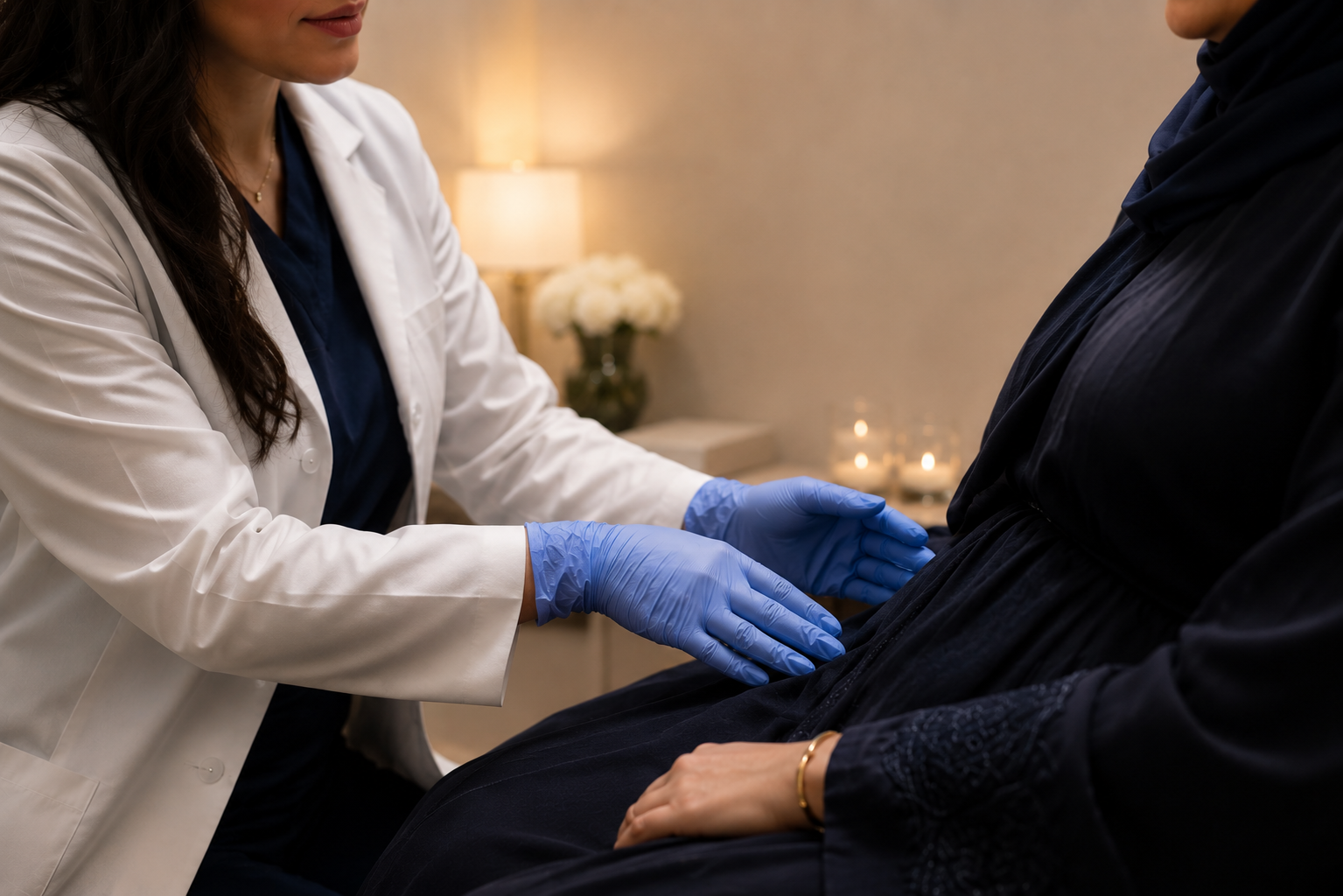
Body contouring after a gastric sleeve surgery is the surgical removal and reshaping of excess, loose skin following rapid bariatric weight loss. While sleeve gastrectomy delivers remarkable metabolic transformation, severe skin redundancy often leads to intertrigo, mobility limitations, and persistent body image dissatisfaction. Medical guidelines recommend stabilizing weight for at least 12 to 18 months post-surgery before undergoing contouring procedures such as abdominoplasty, brachioplasty, or body lifts. Below, explore the biological mechanisms behind skin stretching, exact surgical timelines, safety risks, and critical credentials required for patients in Saudi Arabia.

Why Excess Skin Develops After Gastric Sleeve Surgery
Rapid and substantial weight loss, the kind that gastric sleeve surgery facilitates, fundamentally changes the body's relationship with its skin. Skin elasticity depends on collagen and elastin fibers, and when these fibers have been stretched over years of carrying excess weight, they often cannot retract fully once that weight disappears.
Several factors determine how much loose skin a patient will experience:
Total weight lost: Patients who lose more than 45 kilograms tend to have more pronounced skin laxity, as documented in post-bariatric skin correlate studies (Baillot A et al., Obes Surg, 2023; DOI: 10.1007/s11695-023-06698-w).
Age at the time of surgery: Older patients produce less collagen, which reduces the skin's ability to bounce back.
Genetics and skin quality: Some individuals are genetically predisposed to better or worse skin elasticity, independent of other factors.
Duration of obesity: The longer skin has been stretched, the more structural damage occurs at the dermal level.
The areas most commonly affected include the abdomen, upper arms, inner thighs, chest, and the lower face and neck. Contrary to popular belief, exercise and hydration, while beneficial for overall health, cannot fully resolve moderate to severe skin redundancy once the structural proteins have been compromised.
For many patients, this excess skin is not merely a cosmetic concern. It can lead to intertrigo (skin fold infections), chronic rashes, difficulty with mobility, and significant psychological burden. A systematic review published in Obesity Reviews found that body image dissatisfaction and quality-of-life reductions persist in a substantial proportion of post-bariatric patients dealing with excess skin (Jiang Z et al., Obes Rev, 2021; DOI: 10.1111/obr.13201). Recognizing these medical dimensions is essential before exploring surgical options.
When Is the Right Time for Body Contouring After Bariatric Surgery?
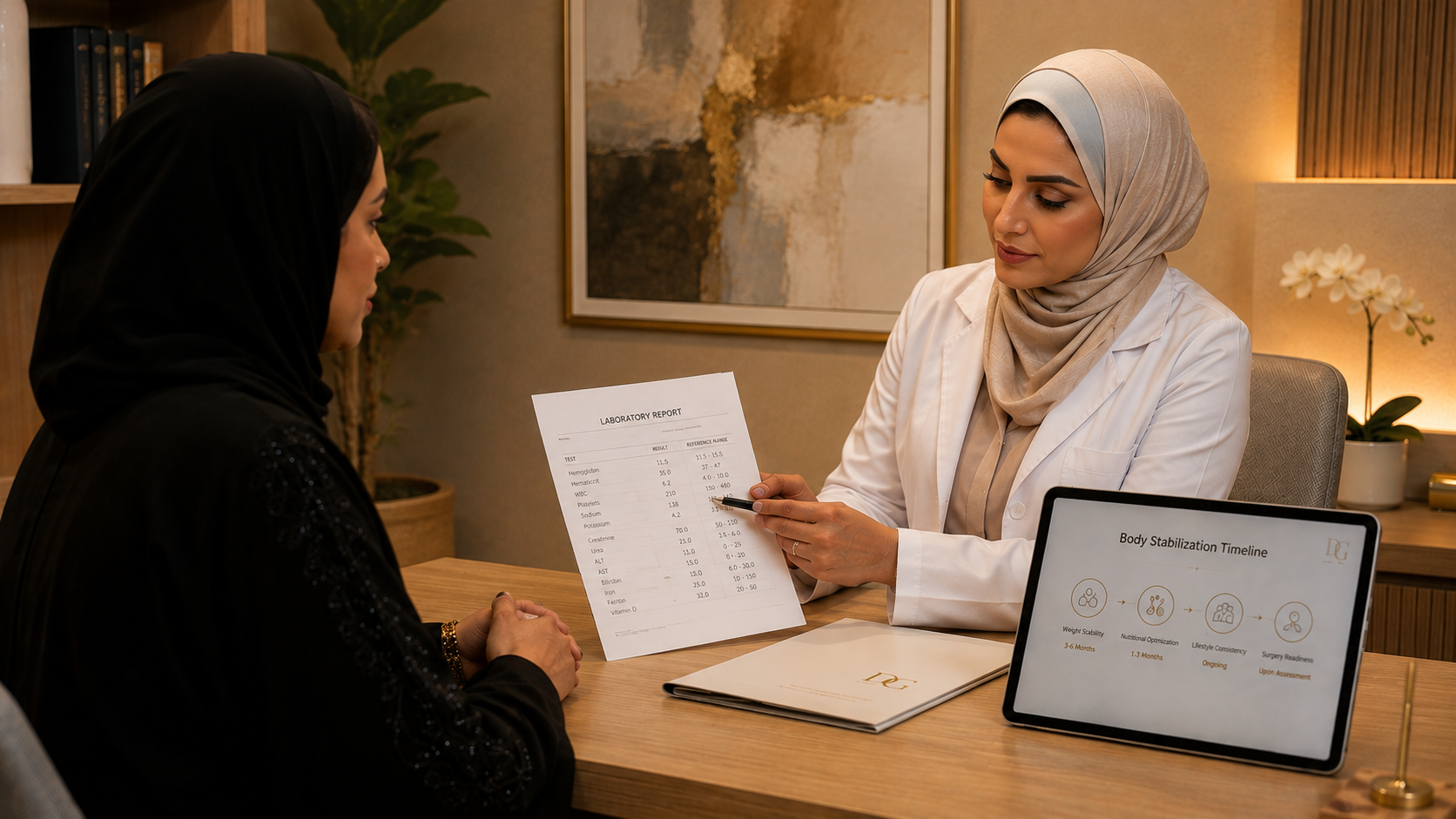
Timing is one of the most critical decisions in planning body contouring after gastric sleeve surgery. Board-certified plastic surgeons generally advise patients to wait until their weight has stabilized for a minimum of 12 to 18 months following their bariatric procedure. Operating too early, while the body is still losing weight, increases the risk of suboptimal results and may necessitate revision surgery.
Weight stability is typically defined as maintaining the same weight, within a few kilograms, for at least three to six consecutive months. During the consultation phase, surgeons will assess:
Nutritional status: Post-bariatric patients are at risk for deficiencies in protein, iron, vitamin D, and B12. These deficiencies impair wound healing and increase surgical risk. A blood panel is standard before clearance.
Body mass index (BMI): While there is no universal BMI cutoff, many practitioners prefer patients to be below a BMI of 30 to 32 before proceeding with extensive contouring, as higher BMI and early surgery correlate with increased complication rates (Aesthetic Plast Surg, 2021; DOI: 10.1007/s00266-021-02315-2).
Psychological readiness: Patients should have realistic expectations. Body contouring improves contour and function but does not produce a body free of scars or imperfections.
In Saudi Arabia, surgeons credentialed through the Saudi Commission for Health Specialties (SCFHS) follow evidence-based protocols that align with international bariatric and plastic surgery guidelines. Patients should verify that their surgeon holds appropriate board certification and has documented experience with post-bariatric body contouring specifically, not just general plastic surgery.
Rushing the process is a common mistake. Patience during this stabilization period directly correlates with better long-term outcomes and fewer complications.
Common Body Contouring Procedures and What to Expect
The term estiramiento corporal after gastric sleeve surgery encompasses several distinct surgical procedures, each targeting different anatomical zones. A qualified surgeon will design a personalized plan based on the patient's specific pattern of skin excess and their health profile.
The most frequently performed procedures include:
Abdominoplasty (tummy tuck): Removes excess abdominal skin and tightens the underlying musculature. This is the single most requested procedure among post-bariatric patients.
Brachioplasty (arm lift): Addresses sagging skin along the upper arms, an area particularly resistant to improvement through exercise alone.
Lower body lift: A circumferential procedure that targets the abdomen, flanks, hips, and buttocks in a single operation. It is more extensive but delivers results.
Thigh lift: Removes redundant skin from the inner or outer thighs, improving both contour and function.
Mastopexy or gynecomastia surgery: Addresses breast tissue changes in both female and male patients following massive weight loss.
Some patients undergo staged procedures, spacing surgeries several months apart, while others may be candidates for combined operations depending on their overall health and the surgeon's assessment of operative risk. Combining too many procedures in a single session increases anesthesia time and complication rates, so this decision requires careful clinical judgment.
Recovery timelines vary considerably by procedure. A standard abdominoplasty typically requires two to four weeks of restricted activity, while a lower body lift may demand six weeks or more. Compression garments, drain management, and gradual return to physical activity are standard components of post-operative care.
Patients in Saudi Arabia should ensure their chosen facility is accredited by the Saudi Central Board for Accreditation of Healthcare Institutions (CBAHI), which sets quality and safety standards for surgical centers across the Kingdom.
Risks, Warning Signs, and When to Seek Immediate Medical Attention
Every surgical procedure carries inherent risks, and body contouring after massive weight loss is no exception. Post-bariatric patients face a somewhat elevated complication profile compared to standard cosmetic surgery patients due to factors like nutritional deficiencies, larger wound surface areas, and the physiological impact of prior bariatric surgery.
Common complications include:
Seroma formation: Fluid accumulation beneath the skin, which may require aspiration.
Wound dehiscence: Partial separation of the surgical incision, more common in patients with poor nutritional status or diabetes.
Infection: Particularly in skin fold areas where moisture can accumulate.
Deep vein thrombosis (DVT): A serious risk with any prolonged surgery, mitigated through prophylactic anticoagulation and early mobilization.
A comprehensive systematic review and meta-analysis published in Aesthetic Plastic Surgery reported that overall complication rates in post-bariatric body contouring average around 31.5%, with seroma and wound-related issues being the most frequent (Aesthetic Plast Surg, 2021; DOI: 10.1007/s00266-021-02315-2).
⚠️ Seek immediate medical attention if you experience any of the following after surgery:
Sudden shortness of breath or chest pain
Fever above 38.5°C persisting for more than 24 hours
Rapidly expanding redness, warmth, or foul-smelling discharge from the incision site
Sudden swelling or pain in one leg (possible DVT)
Dizziness, fainting, or signs of significant blood loss
These warning signs require emergency evaluation, do not wait for a scheduled follow-up appointment. Patients should have a clear post-operative communication plan with their surgical team, including after-hours contact information.
Choosing a surgeon who maintains transparent complication tracking and follows structured post-operative monitoring protocols is one of the most effective ways to reduce risk. In Saudi Arabia, practitioners registered with the SCFHS are subject to continuing medical education requirements that include surgical safety updates.
Body contouring represents a medically meaningful step for patients dealing with excess skin after significant weight loss. The decision requires careful timing, thorough medical evaluation, and a qualified surgical team experienced in post-bariatric body contouring. Patients in Saudi Arabia should seek practitioners credentialed by the SCFHS and facilities accredited by CBAHI. Rather than rushing toward surgery, invest time in optimizing your nutrition, stabilizing your weight, and having an honest conversation with a board-certified specialist about what body contouring can, and cannot, achieve for your individual situation.

Medical Disclaimer / إخلاء مسؤولية طبية:
This content is provided for general educational purposes only. It is not intended to diagnose, treat, monitor, or manage any medical condition and is not a substitute for evaluation by an SCFHS-credentialed healthcare professional.
يُقدم هذا المحتوى لأغراض تعليمية وعامة فقط. وهو ليس مصممًا لتشخيص أي حالة طبية أو علاجها أو مراقبتها أو إدارتها، ولا يُعد بديلاً عن التقييم الطبي من قِبل أخصائي رعاية صحية معتمد من الهيئة السعودية للتخصصات الصحية (SCFHS).
Ready to Get Started?
Have questions about your options or the recovery process? Ask Zaina, your independent aesthetic medicine advisor, for personalized guidance and information.